Part of the Comprehensive Guide to Stimming
Self-stimulatory behavior is something that children with autism spectrum disorder (ASD), ADHD and other disorders commonly engage in as a way to regulate their emotions and calm themselves. Stimming, as it’s known, is also a behavior that some neurotypical individuals engage in as well.
When people feel overwhelmed, stressed, anxious or worried, for example, they might tap their fingers on a table, bite their nails or shake their legs repeatedly. A lot of the times, these behaviors are done subconsciously, without the person who’s doing them even really noticing.
Stimming is particularly common9 for children who are on the autism spectrum4, as they often face challenges with processing and expressing their emotions1. Tactile stimming is just one type of this coping behavior, with some children tending to exhibit this form of it over other types.
We’ll discuss what tactile stimming is, and what role it plays in children on the autism spectrum, in more detail below.
What are Self-Stimulatory Behaviors?
Self-stimulatory behaviors, or stimming, refers to any repetitive behavior that an individual engages in in response to certain stimuli. There’s no one reason why the person might be exhibiting the behavior, and there are also many different ways in which the behaviors manifest themselves.10
For instance, it could be that the child bites their nails when they’re feeling nervous or taps their fingers when they’re feeling overwhelmed. These are actually both tactile stimming behaviors, as they relate to the sense of touch.
Children on the autism spectrum commonly stim in response to the emotions that they feel3. It’s not just all associated with perceived negative emotions such as fear, anxiety and stress, though. They might also stim if they feel excited, happy or bored.
A major reason why children with ASD stim is they might feel overwhelmed, whether that be because they’re in a large crowd of people they don’t know, whether they’re in a new environment or anything else.
They use their stimming behaviors to help them regulate their emotions and calm themselves down.2
What is Tactile Stimming?
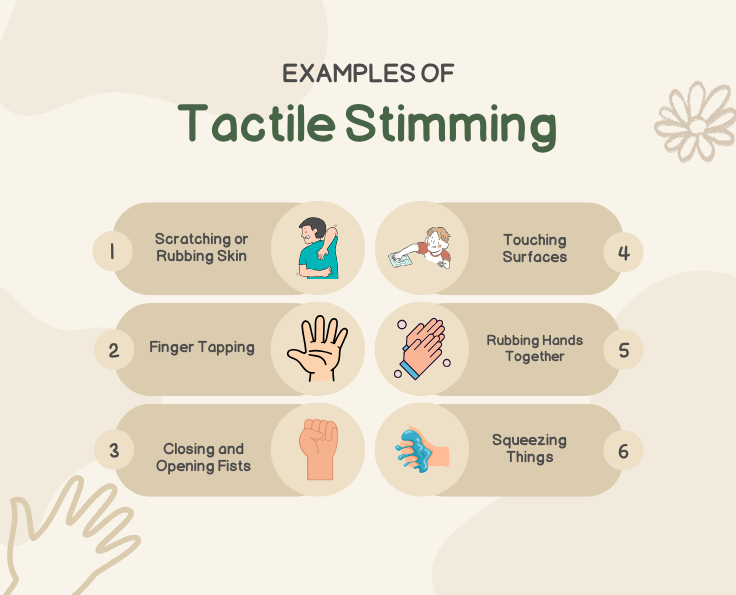
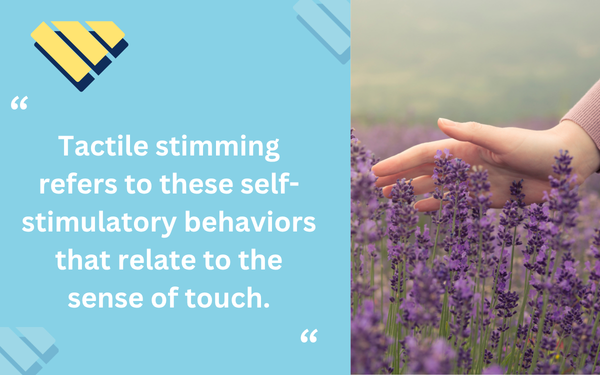
Tactile stimming refers to these self-stimulatory behaviors that relate to the sense of touch.
It could include scratching or rubbing their skin with either their hands or other objects. It could include tapping of fingers repeatedly, or other repeated movements of the hands, such as closing and opening fists.
Other examples include touching surfaces, rubbing their hands together, leaning into certain objects and squeezing things.
Children who exhibit tactile stimming may get a significantly differently reaction from different touches and textures7 than other people do5. They might find comfort through these touches, which is why they’ll exhibit this type of stimming to regulate their emotions.6
Some children who engage in tactile stimming often could benefit from sensory cushions that vibrate, which could help them redirect these feelings.
What Triggers Tactile Stimming?
The main trigger for stimming is emotions, since many children on the autism spectrum face challenges with processing and expressing certain emotions.
When a child with autism feels overwhelmed, for instance, they might not be able to properly express to a parent, teacher or authority figure how they need help. In addition, they might not be able to properly regulate their emotions in ways that others can.
In response to this, they exhibit a self-stimulatory behavior. Children who engage in tactile stimming typically find comfort in how certain things feel.
When they engage in this behavior, they’re better able to self-soothe, which in turn helps them reduce anxiety, focus their attention and relax themselves if they’re experiencing a sensory overload.
These tactile stimming behaviors, in many ways, is a way for these children to express themselves and communicate their emotions.
How Does ABA Therapy Approach Tactile Stimming?
A main part of applied behavioral analysis is recognizing that all stimming behaviors — no matter what type and how they’re expressed — are natural for children with autism. A basic concept of ABA therapy is providing strategies that help children manage their behaviors more effectively.7
ABA therapists might encourage tactile stimming behaviors, particularly when they’re safe and don’t present any possibility of harm. They might encourage a child to escape to a safe environment where they can tactile stim, for instance, if they’re feeling overwhelmed.
One of the main goals of ABA therapy is to identify what some of the triggers for tactile stimming are for each patient. This allows the ABA therapist to create different strategies that can help children with autism manage their stimming while also reducing the potential exposure to their triggers.
Children who participate in ABA therapy are taught how they can self-regulate themselves in more effective ways. And by doing this, they can learn how to express themselves better so they can get the support they need in different situations.
Blue Gems ABA Addresses Tactile Stimming
Tactile stimming is a behavior that people of all types engage in, whether they are on the autism spectrum or not. Children who have autism just might be more likely to engage in these behaviors as they try to cope with their emotions and self-regulate.
At Blue Gems ABA, we know how important it is to recognize these tactile stimming behaviors and identify the triggers for them. In this way, our experienced BCBAs can create a targeted and customized ABA therapy treatment program that addressed tactile stimming in those who exhibit the behavior.
By doing so, we’re better able to support children as they build the communication, social and daily life skills with which they commonly struggle.
To learn more, please contact us today.
References
- CDC — Clinical Testing and Diagnosis for Autism Spectrum Disorder
- Rethinking Stereotypies in Autism
- National Institute of Mental Health — Autism Spectrum Disorder
- Prevalence and Determinants of Motor Stereotypies in Autism Spectrum Disorder
- Tactile Responsiveness Patterns and Their Association With Core Features in Autism Spectrum Disorders
- Mechanisms of Tactile Sensory Phenotypes in Autism
- Evidence-Based Behavioral Interventions for Repetitive Behaviors in Autism
- National Center for Complementary and Integrative Health — Autism
- NICHD — Autism Spectrum Disorder
- Blue Gems ABA — Stimming Examples and Behaviors
Learn More About Stimming
- Auditory Stimming
 Part of the Comprehensive Guide to Stimming Stimming is something that is oftentimes associated with children who have developmental disorders such as autism spectrum disorder (ASD) or ADHD. However, self-stimulatory behaviors are actually things that many people do in their daily lives — sometimes without even noticing it. People who feel nervous, for instance, may… Read more: Auditory Stimming
 - Autism Pinching Behavior: Causes and ManagementPart of the Comprehensive Guide to Stimming When children are young, they engage in many behaviors that aren’t appropriate as they age. This could include putting non-food items in their mouth, banging on furniture and pinching other people or themselves. Some of these behaviors are how children learn the world around them. In time, children… Read more: Autism Pinching Behavior: Causes and Management
- Excessive Blinking in AutismPart of the Comprehensive Guide to Stimming While autism is a neurodevelopmental disorder that affects people in many different ways, there are some common challenges that people who have autism spectrum disorder (ASD) typically face. This includes difficulty with social interactions and communication in general, as well as restrictive interests and repetitive behaviors. There are… Read more: Excessive Blinking in Autism
- Full Body StimmingPart of the Comprehensive Guide to Stimming Self-stimulatory behaviors, or stimming, is often associated solely with children who have a developmental disorder such as ADHD or autism. However, stimming is actually something that can occur in any individual, regardless of their abilities. People who are nervous, for example, might tap their fingers or shake their… Read more: Full Body Stimming
- Head Banging and AutismIndividuals with autism spectrum disorder (ASD) process things differently than others. Their neurodevelopmental disorder affects them in many ways, and it starts with how the brain functions and processes information. While the signs and symptoms of autism can span a wide spectrum, it is commonly characterized by a deficit in communication and social interaction, as… Read more: Head Banging and Autism