


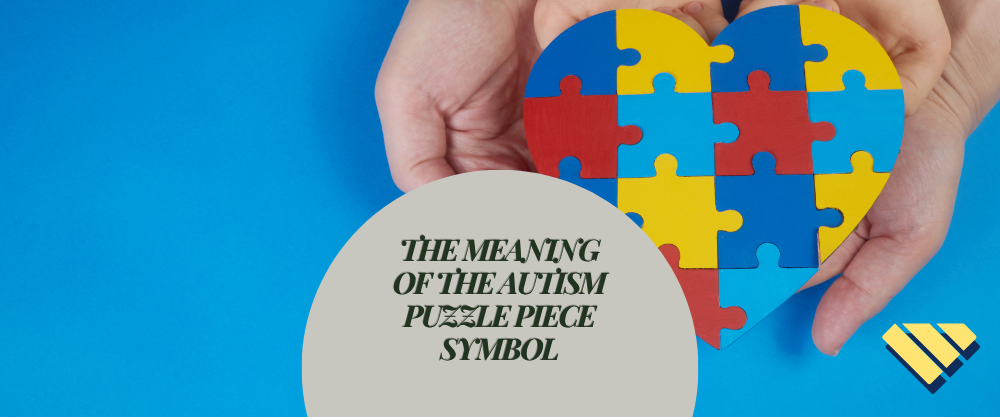
Nearly 60 years ago, the United Kingdom’s National Autistic Society was looking for a way to symbolize what it means to have autism and to raise awareness for the developmental disorder. What they created in 1963 was a symbol that many people still associate with autism today — the puzzle piece1.
When that symbol was introduced, it was meant to represent how autism is complex and how it’s often a mystery2. It was also meant to convey that autism had to be solved and was a challenge to understand.
At the same time, the intent behind the puzzle piece symbol was to highlight how diverse autism is3, and how each individual who is diagnosed with it is unique, having different challenges and strengths.
The autism puzzle piece symbol was also intended to symbolize how important it was that different abilities and perspectives needed to be brought together so that society could be more inclusive.
For all the positive awareness the puzzle piece symbol has brought to autism, it’s not universally accepted by everyone. There are some controversies about the symbol and what some people believe it exudes.
Here are some of the controversies around the autism puzzle piece symbol and what other symbols are used to represent autism spectrum disorder (ASD).
Stigmatization
One concern of the puzzle piece symbol is that it focuses on fixing autism. Puzzles are meant to be solved, and some people believe that this symbol insinuates that autism is something that needs to be solved, too4.
This goes against modern thinking about the topic, which believes that all individuals should be accepted for who they are, whether they have autism or any other challenges.
Learn more about the stigma of autism
| Aspect | What It Represents | Why It’s Debated Today |
|---|---|---|
| Complexity & Mystery | When introduced in 1963, the puzzle piece was intended in part to represent autism as complex and difficult to understand. | Critics argue that portraying autism as a puzzle or mystery can suggest that autistic people need to be figured out or “solved.” |
| Individuality | The symbol has also been used to highlight the diversity of autism and the different strengths and challenges of each autistic individual. | People interpret the imagery differently. Some connect it with individuality, while others believe a single puzzle piece can imply incompleteness. |
| Stigmatization | A puzzle is normally something that needs to be completed or solved. | Some critics believe this association can imply that autism itself needs to be fixed, conflicting with perspectives centered on acceptance of autistic individuals. |
| Infantilization | Puzzle imagery is sometimes associated with children, and autism discussions have historically focused heavily on childhood. | Critics say the symbol may reinforce stereotypes that autistic people are childlike, incomplete, or dependent, including when referring to autistic adults. |
| Historical Associations | The puzzle piece dates to an era when understanding and treatment of autism were very different from today. | For some people, the symbol recalls older attitudes and harmful practices associated with autism, including forced normalization and institutionalization. |
| Awareness & Inclusion | The puzzle piece has helped make autism recognizable to a broad audience and has also been associated with bringing different abilities and perspectives together. | Its widespread recognition remains meaningful to some people, while others prefer symbols they feel emphasize neurodiversity, acceptance, and possibility. |
Infantilization
Some people with autism are forced to deal with infantilization, or the practice of treating a person as if they’re a child, even when they’re not5. Much of this is due to autistic people facing challenges with communication, socialization and even essential daily tasks.
Critics of the puzzle piece argue that the symbol perpetuates this stereotype by implying that people who have autism are either incomplete, have to be solved or put together, or are missing something.
The symbol is just one piece of the puzzle, after all, and not a complete puzzle.
Harmful Practices
How autism is viewed and treated today is much different than it was 60 years ago. Today, it’s much more widely accepted, and advanced treatments such as applied behavioral analysis, or ABA therapy8, have been proven to help individuals on the autism spectrum build the social, communication and daily skills they need to succeed in life6.
It wasn’t always this way, though. At times, some harmful practices were used in autism treatment, including forced normalization and institutionalization.
Some people believe that the puzzle piece symbol serves to remind people of some of these negative aspects, since it was created at a time when there was a lot of negativity surrounding autism.
Is All of the Reaction to the Autism Puzzle Piece Symbol Negative Today?
While there are controversies surrounding the autism puzzle piece symbol, not everyone believes it is negative. Just like autism itself affects people in unique ways, so, too, do people have unique and different views about the puzzle piece symbol.
Autism Speaks, one of the world’s leading advocacy groups for ASD, still uses the puzzle piece symbol today to raise awareness. It has, however, updated the symbol with a wider spectrum of colors9.
The organization says this new version of the symbol “is meant to be representative of the spectrum of perspectives and experiences autistic people may have.”
Autism Speaks also says it regularly seeks input and feedback from people within the autism community so the organization is reflective of the widest range of autistic individuals and their families as possible.
Other groups have created alternative symbols to the puzzle piece symbol. This includes the infinity symbol, which is meant to represent how autistic individuals have infinite possibilities in life, as well as the rainbow infinity, which is meant to symbolize neurodiversity10.
Blue Gems ABA Helps Autistic Children Thrive
While there may be some controversy surrounding the autism puzzle piece symbol, there’s no denying that it has raised awareness for the developmental disorder in the almost 60 years since it was first created.
The important thing to remember is that, while people on the autism spectrum may face challenges that neurotypical individuals do not, it doesn’t mean they can’t live happy and fulfilling lives.
This is a mantra that we strongly adhere to at Blue Gems ABA, and we help children with autism achieve this every day by administering ABA therapy. Our trained BCBAs work hand-in-hand with children and their families to help them build the social, communication and daily life skills they need to thrive7.
For more information, please contact us today.
References
- Do Puzzle Pieces and Autism Puzzle Piece Logos Evoke Negative Associations?
- Notes on a Puzzle Piece
- Testing and Refining Biomarkers to Support Intervention Research for Children with Autism
- Do Puzzle Pieces and Autism Puzzle Piece Logos Evoke Negative Associations?
- Infantilizing Autism
- Evidence-Based Practices for Children, Youth, and Young Adults with Autism: Third Generation Review
- Identification, Evaluation, and Management of Children With Autism Spectrum Disorder
- Autism Therapy Types & Interventions
- Autism Puzzle Piece Logo
- Teaming Up With X Factor Winner and Renowned Artist to Shine Spotlight on Autism
